
 +33 1 34809897



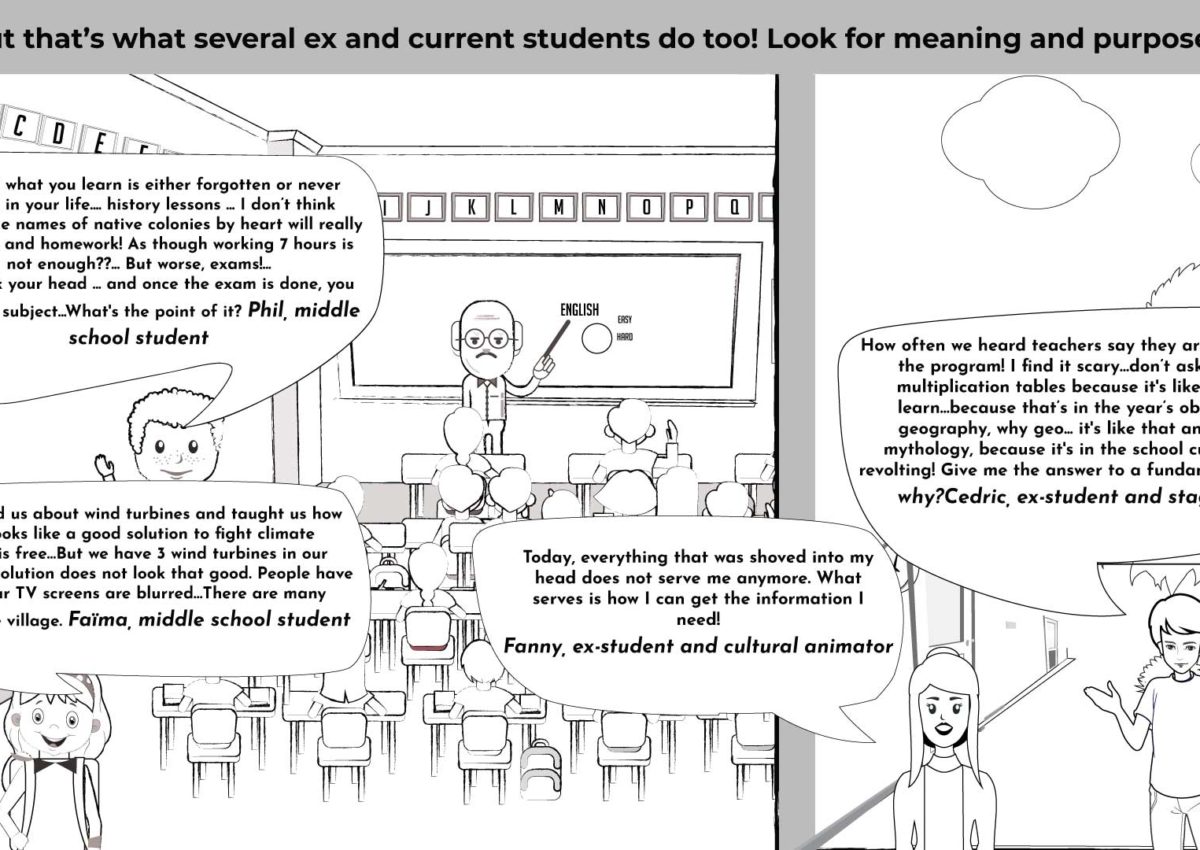
Why do reforms keep coming — and schools keep looking the same?
“I never thought people would listen to what I have to say.”
What one classroom moment can reveal about education reform.
A quiet student said this at the end of an interdisciplinary project on renewable energy in a French lower secondary school.
Her confidence had shifted.
But almost immediately, another student asked: “Will this count? What is being graded?”
In that moment, the deepest challenge of educational reform became visible – not in policy documents, but in the system’s underlying structure.
In 2016, French collèges introduced compulsory interdisciplinary projects (EPI) – up to 20% of teaching time devoted to inquiry across subjects. On paper, it appeared coherent: collaboration was built into timetables and competency-based assessment aligned with national frameworks.
A group of teachers invited me to accompany them in implementing the reform.
We organised learning around a real-world renewable energy problem, requiring students to draw on multiple subjects. In the classroom, familiar tensions surfaced. Confident students dominated discussions. Others withdrew.
Beyond interdisciplinary work, however, a deeper shift occurred: structured collaboration, shared roles, and explicit listening practices that made relational dynamics visible.
Then came the kind of moment teachers everywhere recognise: the quiet student finding her voice.
And immediately afterwards, the question that revealed the fault line: “What is being graded?”
Parents often ask how fairness will be ensured. Teachers debate how collective inquiry can translate into subject marks. Competency grids may exist on paper but report cards still require individual grades.
The teachers saw the depth of engagement. They were impressed – and quietly aware they could not sustain such work under existing conditions. Their workload had not changed. They were redesigning practices built on subject expertise and individual assessment – being expected to teach collaboration across subject boundaries within a system still structured around subject performance and grading.
Nothing dramatic collapsed.
But nothing fundamental shifted.
Within a year, interdisciplinary work became optional. Some teachers continued. Many returned to established routines.
From a distance, this can look like resistance.
From inside schools, it looks structural.
Reforms do not operate in a vacuum – they must live within the conditions that shape how schools function. As long as systems remain centred on subjects, individual performance, and selection, interdisciplinary work can exist – but cannot stabilise.
Change is constant – and rapid. AI is already reshaping knowledge itself. If each disruption triggers another reform layered onto unchanged structures, we will always be playing catch-up.
Perhaps the first task is not to design the next reform but to learn to see the structures within which reforms must live.



 40 Avenue Hoche
 +33 1 34809897
 +33 6 32280182